
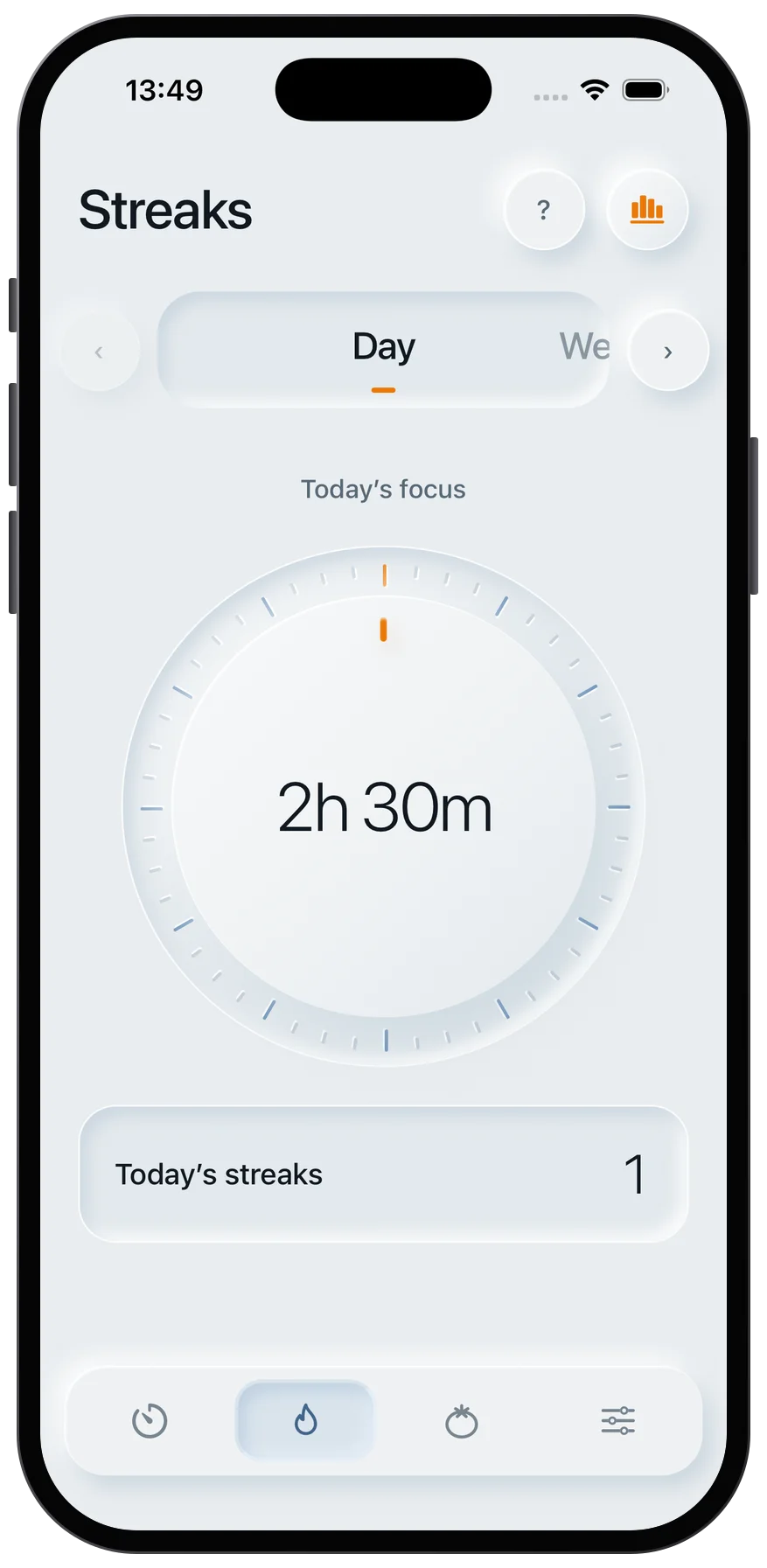
I’d keep your Pomodoro timer break simple: stretch, take a short walk, drink water, look outside, breathe slowly, eat if you’re hungry, or play one calming song. Choose just one based on what you need. If you're on a computer, using a pomodoro timer for Mac can help automate these intervals.
Before stepping away, write down your next action and set your break timer. Keep scrolling out of the break, and leave time to return to your workspace. The aim is a short pause with a clear place to start again.
10 Refreshing Study Break Ideas (to Boost Focus & Energy)
Plan a Five-Minute Break
Plan one simple activity so your break stays short and you know what to do when you return. The classic Pomodoro pattern is 25 minutes of focus followed by a five-minute break. After four focus intervals, take a 15–30-minute break instead of another short one. [6][4]
Before you stand up, write a note with your next action. Start the timer while you’re still seated so the whole break is on the clock. Choose stretching or getting water rather than scrolling. [1][2]
If you use the alarm, keep the timer tab open and your device awake. [8]
1. Gentle Stretching
When to Choose It
Choose stretching when you feel stiff from sitting or find yourself rereading the same paragraph. Keep movements comfortable and pain-free. Skip any stretch that hurts.
Five-Minute Plan
Spend about a minute each on slow shoulder rolls, gentle neck turns, gentle wrist circles, and easy standing stretches. Don’t push into a deeper stretch just to fill the time.
Use the last minute to sit back down and begin the next task on your note.
Distractions to Avoid
Keep your phone out of reach so your break stays screen-free.
How to Restart
When the timer ends, read your note and start.
2. A Short Walk
When to Choose It
Take a short walk when you feel restless after sitting or want a brief reset without losing momentum. [3]
Five-Minute Plan
Before you leave, write down your next step. Walk one lap through the hallway or visit another room, keeping the route short enough for your five-minute break. [5][6]
Distractions to Avoid
Leave your phone at your desk. Skip email and scrolling so they don’t pull you away from your task. [1][2]
How to Restart
Keep that next step visible, or leave yourself a one-line note about where to continue. When you return, sit down and start there rather than scanning your full to-do list. [2][5]
3. Drinking Water
When to Choose It
Take a water break when your energy dips, you lose focus, or you feel thirsty. Drink enough to satisfy your thirst.
Five-Minute Plan
Start a five-minute timer, refill your glass or bottle, and drink some water. Return before the timer ends.
Distractions to Avoid
Leave your phone behind. Skip email, notifications, and social media during the break.
How to Restart
Keep water within reach, then return to the task in your next-step note.
4. Looking Out a Window
When to Choose It
Choose this break when your eyes feel strained from screen work or you need a clear boundary between focus intervals. [2]
Five-Minute Plan
Step away from your screen, stand up, and look at a distant view for a few minutes to give your eyes a screen-free pause. Never look directly at the sun. [1][2]
Distractions to Avoid
Leave your phone behind. Skip news, social media, and new browser tabs during your break. [4][2]
How to Restart
Read your next-step note and get straight back to your task. [2]
5. Slow Breathing
When to Choose It
Try this break when you need to reset without leaving your chair. It can be a simple choice when a task feels overwhelming, repetitive, or mentally noisy after an interruption.
Five-Minute Plan
Set a 4-minute timer, leaving the final minute to reset. Sit upright and relax your shoulders. Breathe slowly and naturally - no counting, breath holds, or forced deep breaths. Stop if you feel dizzy or uncomfortable.
Distractions to Avoid
Skip scrolling and opening feeds that could stretch past your break. Let the timer track the time so you don’t need to keep checking a screen.
How to Restart
Spend the last minute reviewing your note. When the break ends, begin the next step.
6. A Simple Snack
When to Choose It
Eat for hunger, not habit. Choose a snack break when you’re hungry or your energy is dipping. Keep the snack small.
Five-Minute Plan
Before your focus block, set out fruit, yogurt, nuts, or a granola bar. Pick something you can eat in five minutes without cooking or cleanup.
Distractions to Avoid
Step away from your screen while you eat. Skip browsing, videos, and social feeds so your break gives you a rest from more input.
How to Restart
Before you eat, write down one concrete next action. Return to that task as soon as your break ends.
If you don’t need food, choose a quieter reset next.
7. A Calming Song
When to Choose It
Choose one familiar, calming track - ideally instrumental - for a quiet reset that won’t pull you away from your task. [3] Keep it short so the break has a natural stopping point.
Five-Minute Plan
Before your break, choose a track under five minutes. Set a separate break timer, press play, then place your device face down and step away. [4][7]
Distractions to Avoid
Turn off autoplay and queue just one track. Use your device only to press play, without browsing or scrolling. [2][4]
How to Restart
When the timer sounds, stop playback. Use your next-step note to return to your task right away. [1][5][6]
Compare the 7 Break Ideas
Choose a break that fits what you need, and keep it to five minutes. Use the restart cue to return to your written next step.
Scroll sideways to see all columns.
| Break idea | Best use | Main distraction risk | Restart cue |
|---|---|---|---|
| Gentle Stretching | Easing stiffness | Checking your phone while standing | Read your next-step note. |
| A Short Walk | Getting some movement | Wandering too far | Read your next-step note at your desk. |
| Drinking Water | Quenching thirst | Getting pulled into kitchen chores | Read your next-step note. |
| Looking Out a Window | Taking a pause from the screen | Daydreaming past the break | Read your next-step note. |
| Slow Breathing | Settling down when you feel keyed up | Drifting into worries | Take one last slow breath, then start your next step. |
| A Simple Snack | Easing hunger | Lengthy prep or scrolling while eating | Clear the snack and read your next-step note. |
| A Calming Song | Taking a calming audio pause | Letting autoplay continue | Stop playback when the timer sounds. |
End Your Break With a Clear Next Step
After any of the seven breaks, return to one specific next step. Use the full five minutes for both the reset and the return. Before you stand up, write down your next action. Get back to your workspace in time to restart work, and keep the note in view so you don’t have to rethink where to begin. [6][1][2]
If that step feels too big, make it smaller: open the assignment or reread the prompt. Start the focus timer manually when you’re ready to begin. [1][7][2] Use the comparison above to choose your next break without spending much time deciding.
Conclusion
A useful break is a change of pace, not another task. Choose the pause you need, skip scrolling, and return to your next step when the timer ends. [2]
FAQs
Should I take a break if I’m still focused?
Yes, even if you feel focused. Scheduled breaks give you a regular chance to pause before you feel worn out. Research on short breaks links them with more energy and less fatigue, though it doesn’t establish that scheduled breaks work better than self-chosen ones.
If your timer keeps interrupting you before a natural stopping point, try a longer interval that fits your work while still leaving time for regular breaks.
What if five minutes isn’t enough to recharge?
Listen to your body instead of following a fixed schedule. If it suits you better, try a 50-minute focus block followed by a 10-minute break.
If restarting feels hard, try a longer break or pause at a natural stopping point to give yourself time to reset. Adjust your session settings or simplify your tasks to find a pace you can maintain.
How can I restart if I still feel distracted?
Missing the bell or finding it hard to restart gives you feedback about your setup - not your ability. Make your next step smaller or try a shorter focus interval. If interruptions keep happening, pause or reset the timer. An unfinished interval doesn’t erase your progress.
Give yourself a restful break, too. Step away from digital feeds and scrolling to help you return with a clearer mind.